
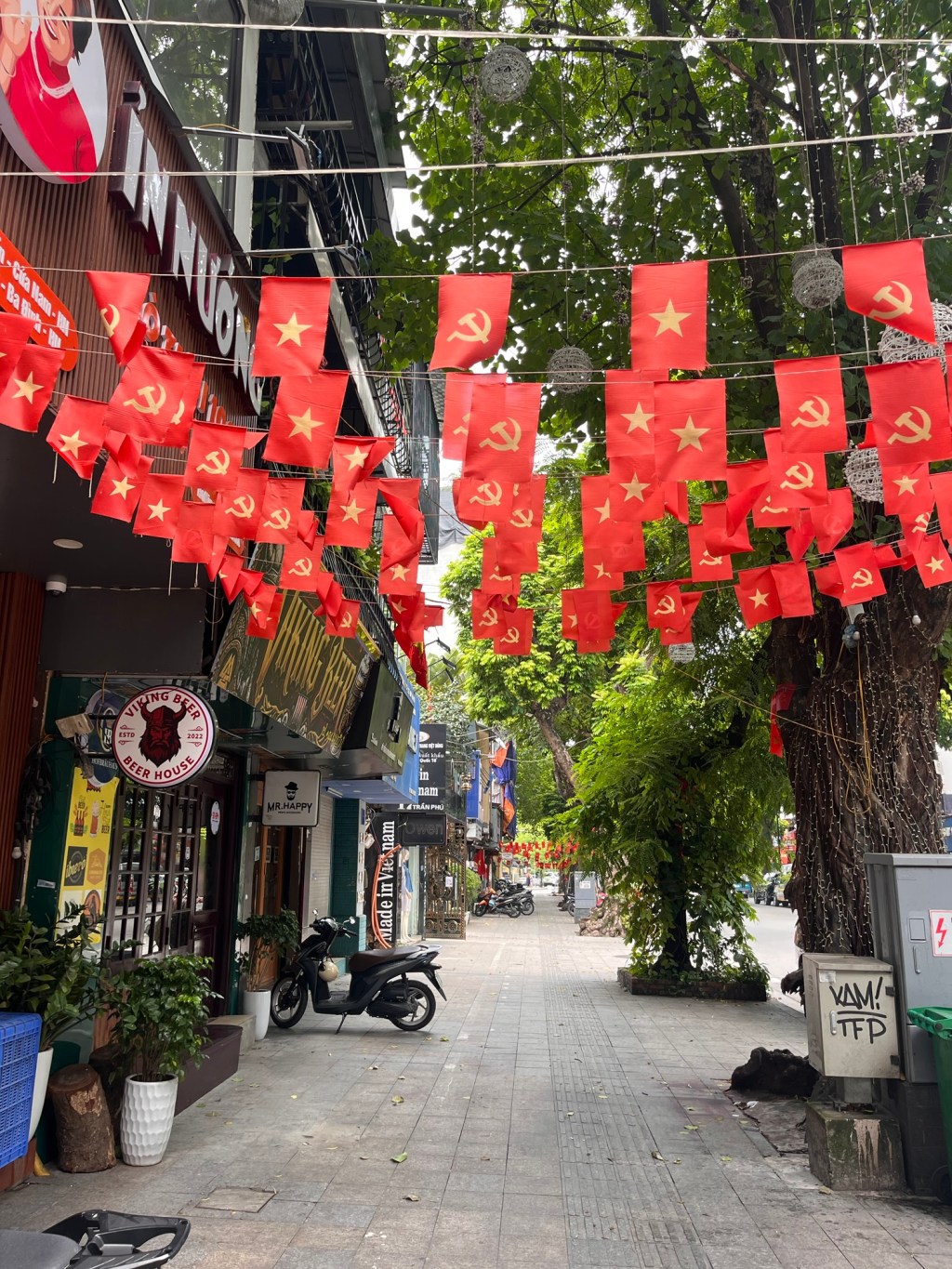
By the time I reached Vietnam, I had already learnt not to ask too many questions on a bus in Southeast Asia.
Why have we stopped?
No idea.
Why is someone unloading boxes in the middle of nowhere?
Also no idea.
Are we nearly there?
Absolutely not.
The journey from Laos to Hanoi involved a closed border, several unexplained stops and the discovery that a sleeper bus can apparently double as a delivery service. Somewhere along the way, I stopped trying to understand the system and accepted that I would arrive in Vietnam when Vietnam was ready for me.
Hanoi eventually was.
Unfortunately, my internet wasn’t.
The bus station was nowhere near where I was staying, I couldn’t call a Grab, and my attempts to ask around for another way to get there were not particularly successful. Eventually, I gave up and took a taxi.
I was promptly overcharged.
A strong start.
By the time I finally reached where I was staying, dropped my things and went back outside, I was tired, hungry and very ready for Hanoi to give me something good.
Instead, it gave me motorbikes.
So many motorbikes.
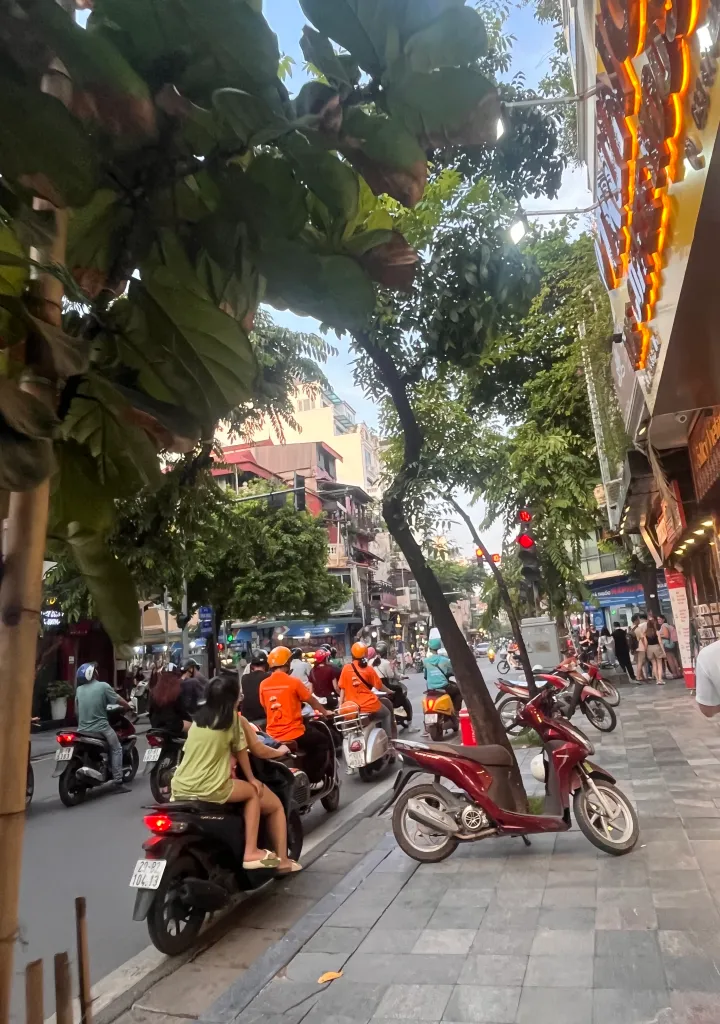
They were on the roads. They were on the pavements. They were parked anywhere I might reasonably have considered walking.
Crossing the street was even more interesting.
My usual technique of waiting for a gap in the traffic quickly proved useless because Hanoi did not seem particularly interested in providing one. Eventually I realised everyone was simply walking into it.
So I did too.
Slowly, slightly terrified and with a level of trust in complete strangers that I normally reserve for nobody.
Somehow, it worked.
By then I was hungry enough to stop caring about traffic and start caring about lunch.
And then came bánh mì gà.
That first one was exactly what I needed: crispy bread, chicken, vegetables, sauce, eaten after far too many hours on a bus and a slightly hostile introduction to Vietnamese traffic.
Hanoi and I immediately began repairing our relationship.
Food helped quite a lot over the next few days.
There was phở, of course. There was Vietnamese coffee. And then there was egg coffee, which I approached with reasonable suspicion because eggs and coffee sounded perfectly happy living separate lives.
It was thick, sweet and creamy, and much nicer than I had expected.
Still, given the choice, I was usually quite happy with a regular Vietnamese coffee.
The Old Quarter became the part of Hanoi where I spent most of my time. I could leave with absolutely no plan and somehow end up eating something, drinking something or standing in front of something I wanted to look at.
There were tiny stools spilling onto the pavement, food being prepared almost at street level, scooters squeezing through spaces I wouldn’t have attempted on foot and people getting on with their day around all of it.
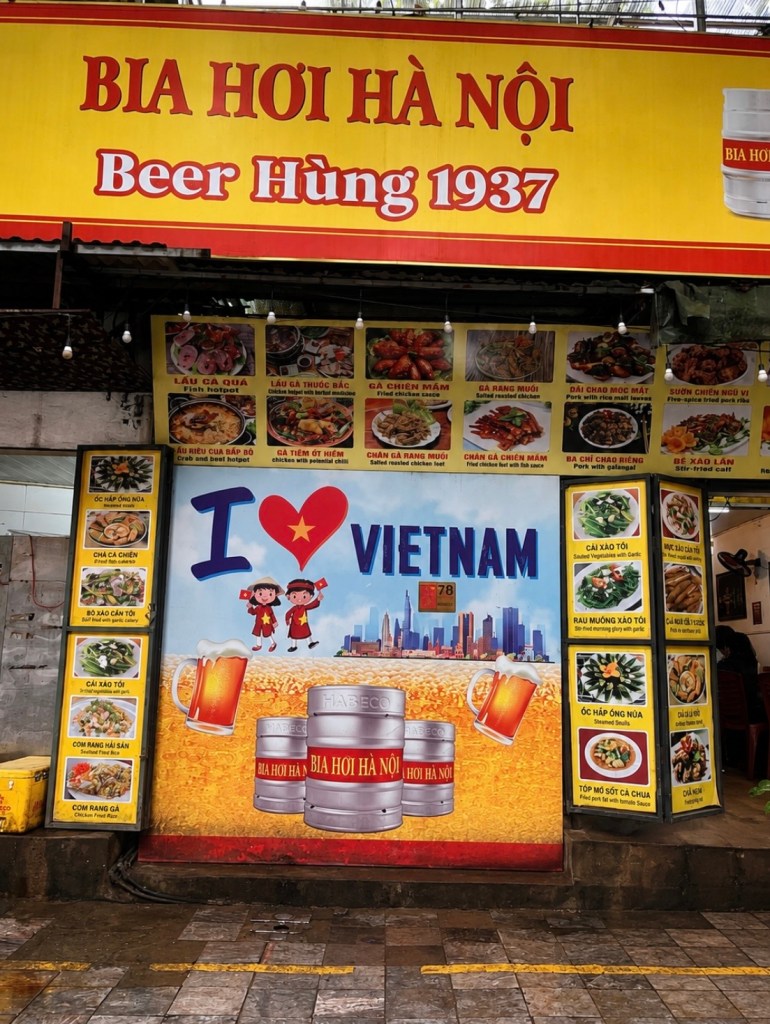
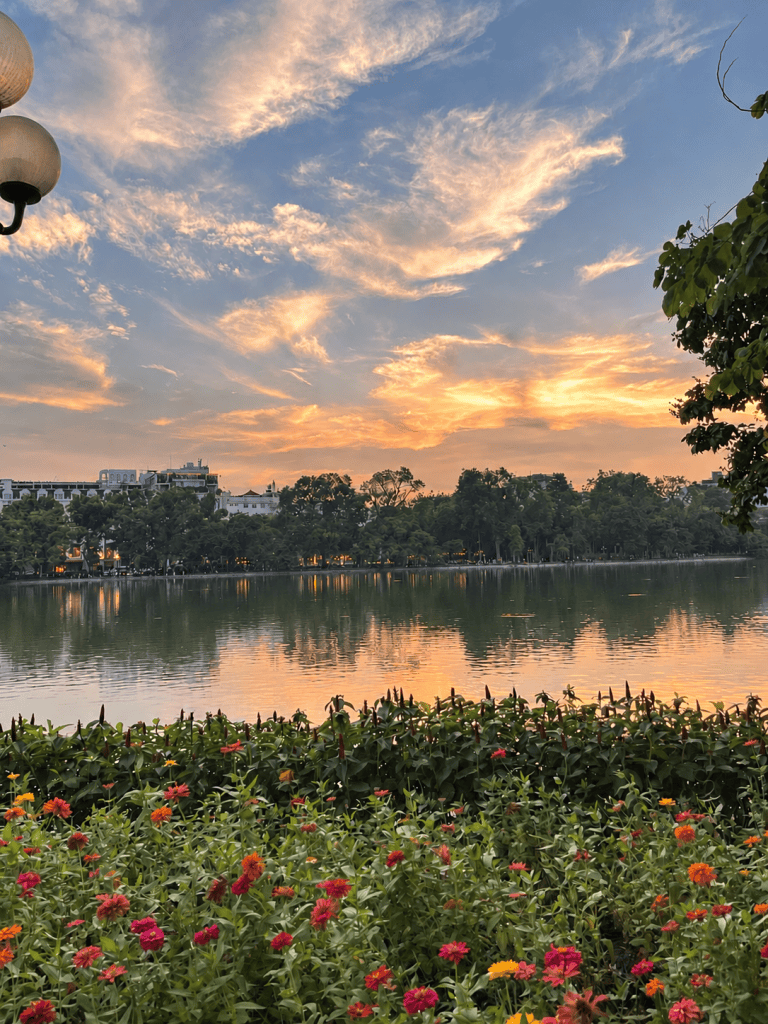
And right in the middle of everything was Hoàn Kiếm Lake.
I kept ending up there without particularly trying to. One minute I would be somewhere among the narrow streets, food stalls and motorbikes, and the next I would be beside the lake, with people walking, meeting friends, exercising or simply sitting around.
It wasn’t an escape from Hanoi.
It was part of it, just with a little more room.
After a while, I stopped noticing the noise quite so much.
I even stopped standing helplessly at every road crossing.
This felt like progress.
Train Street was different.
I had seen it online so many times that I knew exactly what was coming, but knowing does not make it particularly normal to sit beside a railway line with a drink while waiting for a train to pass a few feet away.
For most of the time, it is just a narrow street with cafés.
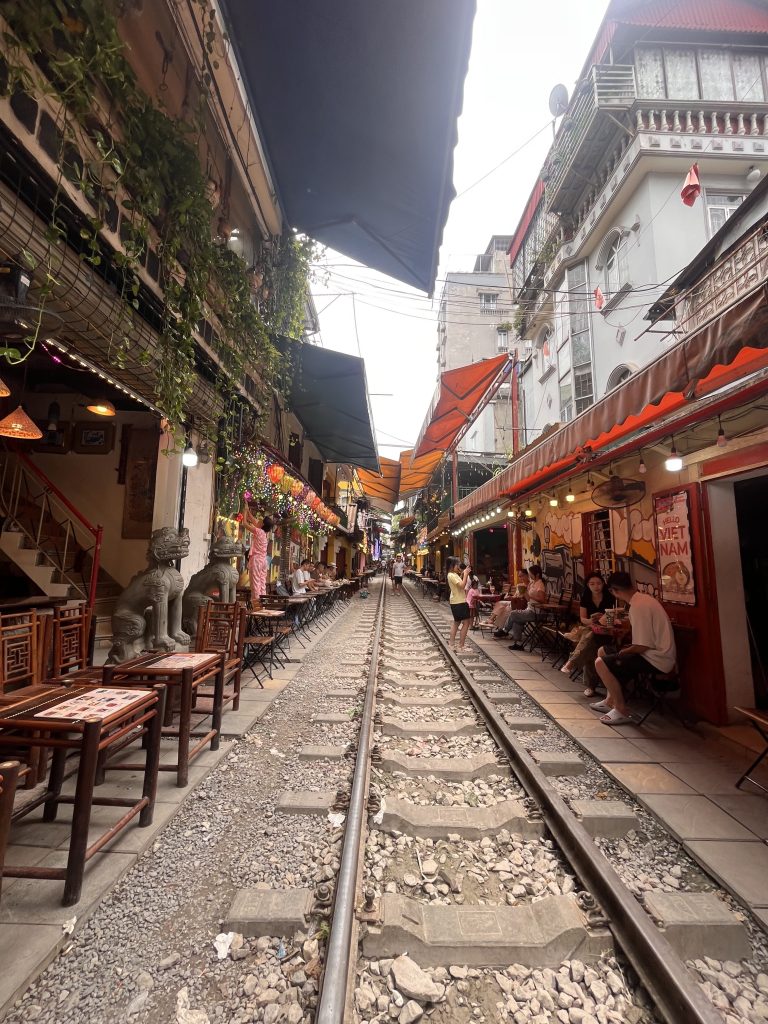
Then suddenly everyone moves.
Chairs disappear, people pull themselves back, phones come out and a train passes ridiculously close to the buildings.
A few moments later, everything goes back where it was.
Coffee resumes.
I enjoyed this far more than I probably should have.
But some of the places I remember most from Hanoi had nothing to do with food or trains.
Vietnam’s history is never very far away here.
At Hỏa Lò Prison, I found myself slowing down. Built during French colonial rule and later used during the Vietnam War, it holds a history that is difficult to absorb quickly. I spent time looking through the photographs, cells and exhibits, reading stories that made the wars I knew from history feel much less distant.
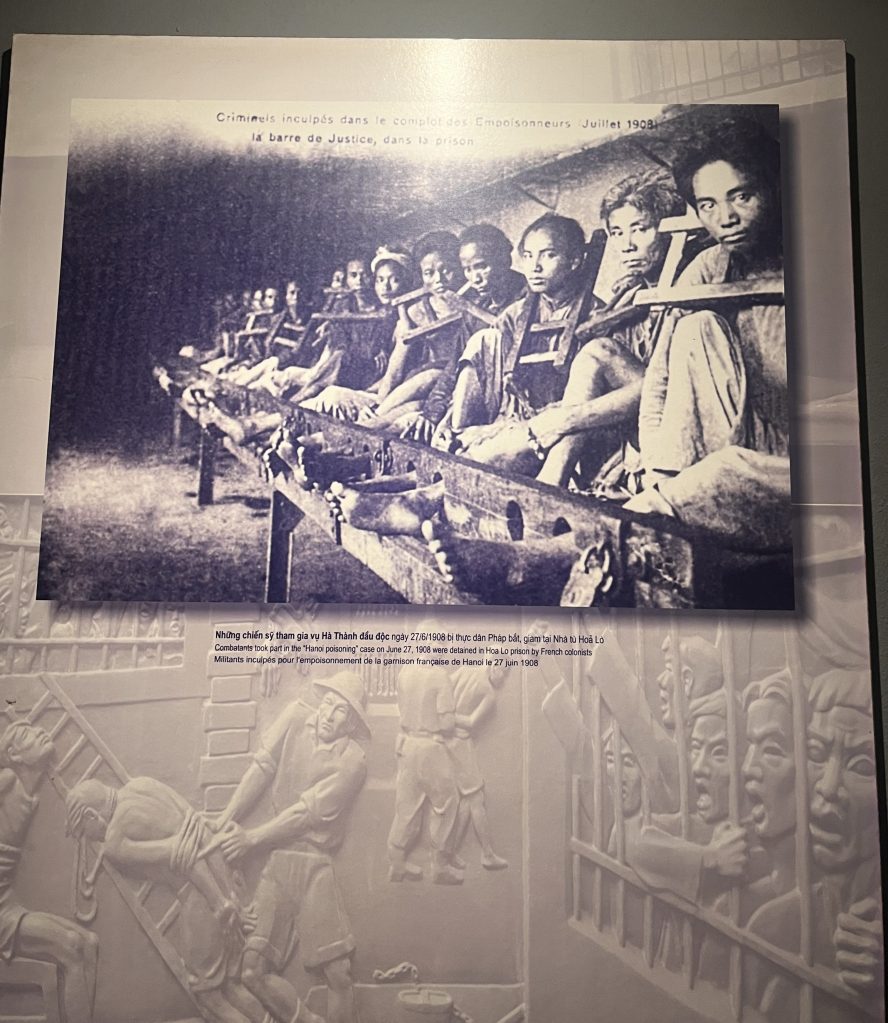
And then I stepped back outside into Hanoi.
The motorbikes were still there.
Obviously.
That contrast became part of my few days in the city without me really planning it. I could spend part of the day learning about a history that was anything but light, then find myself back on a tiny stool with a coffee, watching Hanoi carry on around me.
The city never seemed to require a transition.
Neither did the people I met along the way.
One of the things I loved about travelling through Southeast Asia was how quickly strangers could become company. A conversation at the place I was staying could turn into food, drinks or wandering around together a few hours later. Hanoi gave me plenty of that.
Maybe that helped too.
Because the Hanoi I arrived in and the Hanoi I left felt surprisingly different.
The traffic hadn’t improved.
The humidity certainly hadn’t.
The pavements were still full of motorbikes.
I had simply learnt how to move through it all.
I knew how to cross the road. I knew what I wanted to eat. I knew that egg coffee was much better than I had expected it to be.
And somewhere between the first bánh mì, Hoàn Kiếm Lake, the tiny stools, the people I met, the history and all those motorbikes, Hanoi had gone from slightly exhausting me to being very difficult to leave.
Not bad for a relationship that began with a closed border and an overpriced taxi.
Hanoi was my introduction to Vietnam, but it was only the beginning.
From there, I was heading further north, towards Sapa and Hạ Long Bay, before eventually turning south and continuing through the country.
I had arrived in Vietnam wondering when that bus journey would finally end.
By the time I left Hanoi, I was already looking forward to where Vietnam would take me next.


Leave a Reply