A century ago, if you had arrived in the hills behind Fethiye, you would have found a town called Levissi.
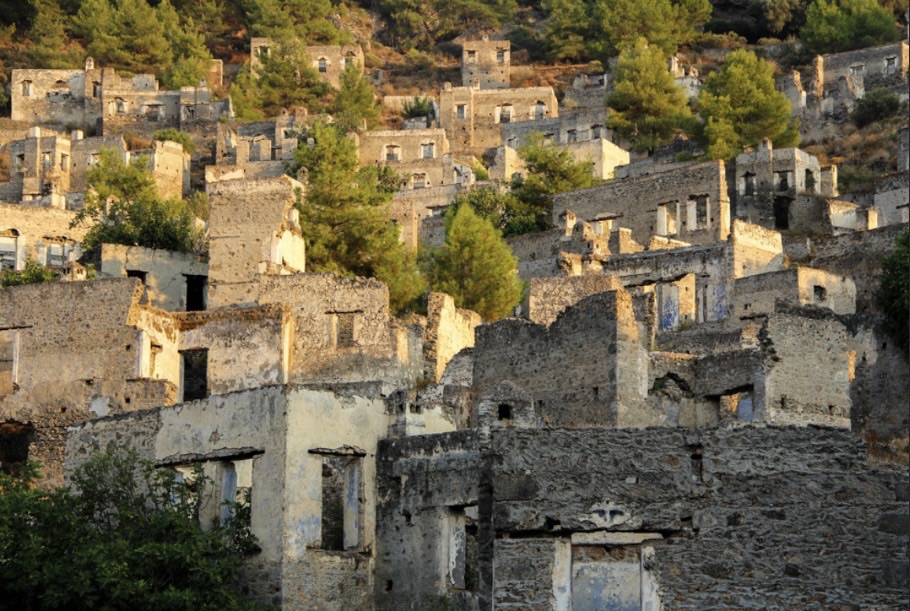
Nearly a thousand stone houses covered the slope. There were schools, shops, chapels and two large Orthodox churches. Rainwater was collected in cisterns beneath the houses, and narrow paths climbed between the buildings. Thousands of people lived here.
Most were Greek Orthodox Christians, living in the final years of the Ottoman Empire. Turkish Muslim villages were scattered through the surrounding countryside, and the communities traded with one another and shared the same small corner of southwestern Anatolia. The sea was only a few kilometres away, beyond mountains covered with pine.
Today, almost the entire hillside is empty.
The houses are still there.
This is Kayaköy.
It sits in the mountains behind Fethiye, close enough to some of Turkey’s best-known beaches that you could spend a holiday in the area without ever knowing it was there. Arrive in the village and the first thing you notice is the scale of it. Hundreds of roofless stone houses spread across the hillside, one above another, connected by paths that are still possible to follow.
At first, there is simply a lot to look at.
Fig trees and wild plants grow between the walls. Doorways open into rooms without roofs. Small lanes turn corners and continue uphill. Two large Greek Orthodox churches stand among the houses, along with the remains of chapels and other buildings from the old town.
And the further you walk, the bigger Levissi becomes.
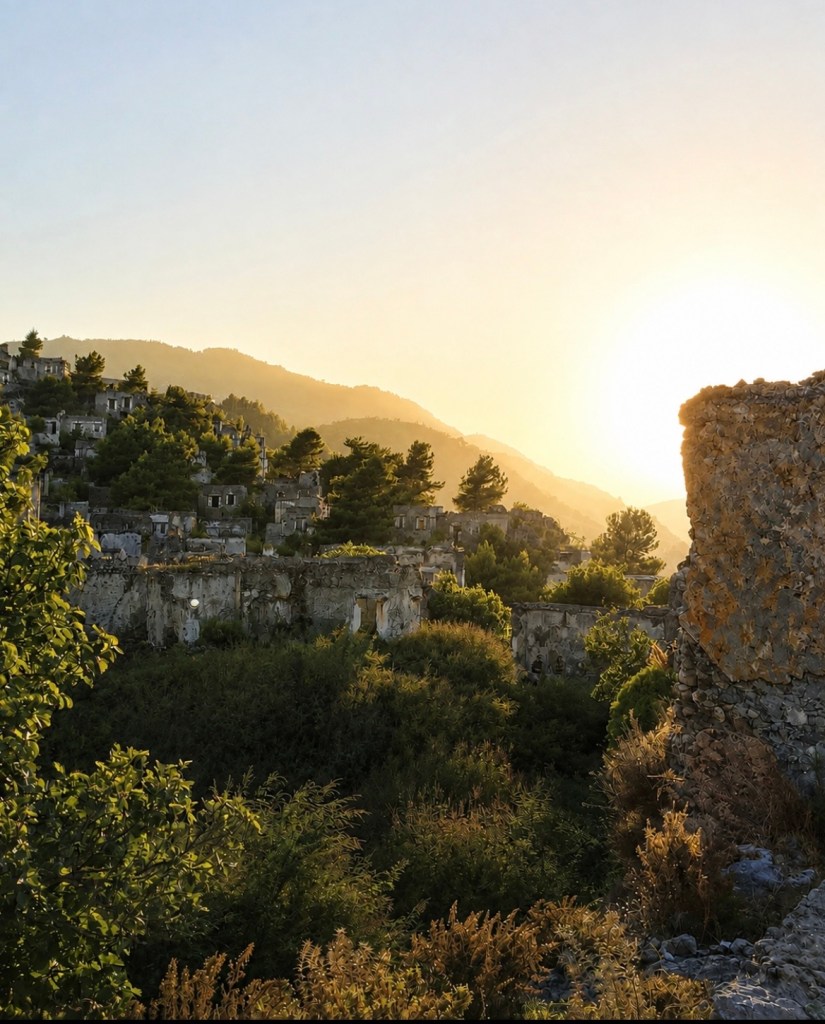
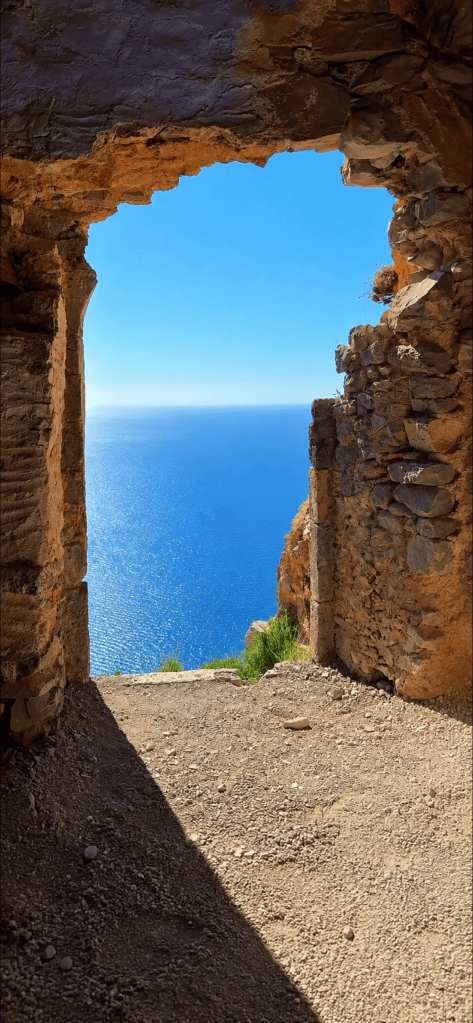
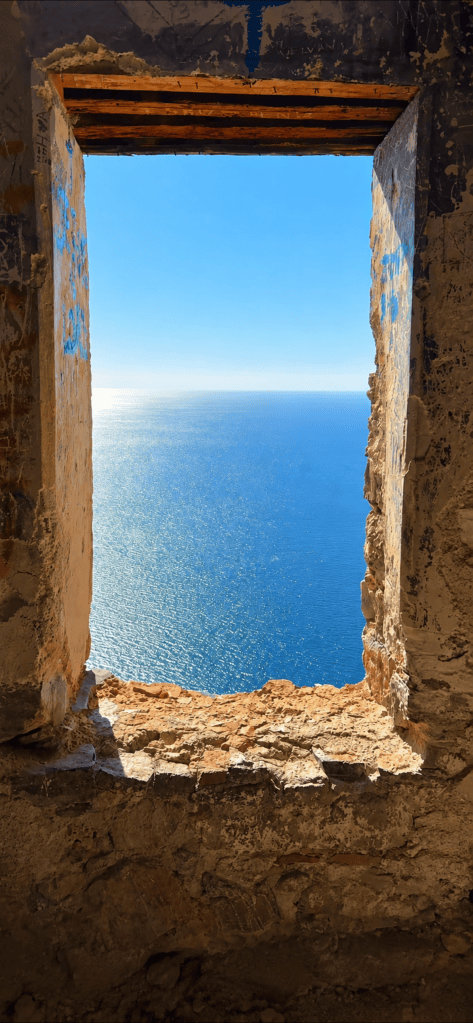
Another row of houses appears above the first. Then another. A staircase leads towards a building that has lost its upper floor. Through an empty window, you can see the opposite side of the valley. Turn around from higher on the slope and suddenly hundreds of houses are below you.
It is difficult to imagine all of them occupied.
But they were.
So where did everybody go?
In 1923, after years of war and the collapse of the Ottoman Empire, Greece and Turkey agreed to a compulsory population exchange based largely on religion. Orthodox Christians in Turkey were sent to Greece, while Muslims in Greece were sent in the opposite direction. Levissi’s Greek Orthodox residents were among those who had to leave, abandoning homes their families had lived in for generations. Muslim families arriving from Greece were later settled here, but many moved elsewhere, and the hillside town never really filled up again.
A major earthquake in 1957 damaged many of the remaining buildings.
What survived is the Kayaköy you can walk through today.
There is no reconstructed historical street waiting at the entrance and no attempt to make the old houses look inhabited again. You walk through what remains: courtyards, walls, churches, stairways and entire streets slowly being taken over by grass, trees and sunlight.
That is probably the best way to experience it.
You can follow the main paths, but it is easy to become distracted by a doorway or a narrow lane disappearing between two houses. Every turn seems to reveal another part of the settlement. Sometimes you find yourself looking into a tiny room. A few minutes later you are high enough to see much of the old town spread across the slope.
And then you notice what is beyond it.
Mountains.
Kayaköy sits among the pine-covered hills of Turkey’s southwestern coast, and one of the trails leaving the village continues towards Ölüdeniz, joining the network of paths around the Lycian Way.
The Lycian Way follows this coastline through territory once inhabited by the ancient Lycians, passing ruins, villages, forests and stretches of Mediterranean coast along the way. But you don’t need to turn the walk from Kayaköy into a history lesson to understand why the route is special.
You only need to start walking.
The stone houses gradually fall behind and the trail enters the forest.
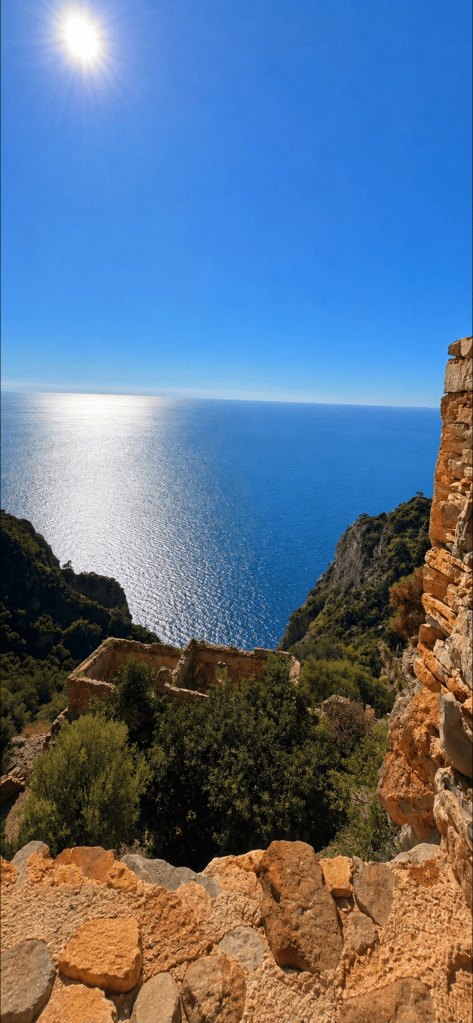
There are stretches where pine trees surround the path completely, and then, somewhere between the branches, the first piece of blue appears.
The Mediterranean.
Keep going and it disappears again.
Then it comes back.
As the trail climbs and turns through the mountains, the glimpses become larger until eventually the coastline begins opening below you.
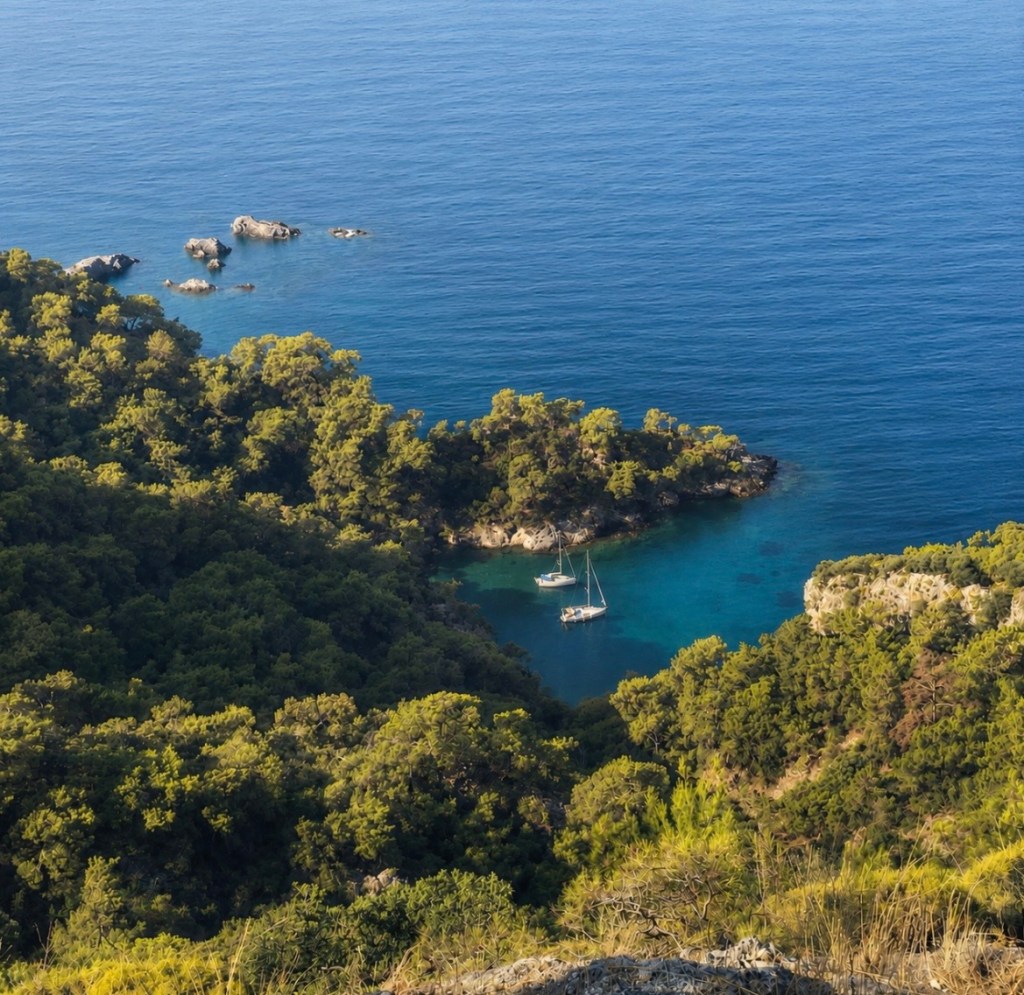
And there is Ölüdeniz.
The lagoon sits between steep green mountains and the open Mediterranean, turquoise close to shore and darker blue further out. Boats move between the bays below. On most days, paragliders are floating above the coastline, having launched from Babadağ high above it.
It is the kind of view people travel to this part of Turkey to see.
What many of them don’t realise is what sits on the other side of the mountain.
That is what makes this particular route so good.
You don’t have to choose between spending a day wandering through an old village or heading for the Mediterranean. They belong to the same landscape. You can start among the stone houses of a town once called Levissi, walk out through the mountains and finish with Ölüdeniz below you.
And somewhere in between, the day becomes much more than a visit to a set of ruins.
Kayaköy has little of the polished feeling that often comes with famous historical sites. There isn’t one monument you arrive to photograph and then leave. The whole hillside is the place. You wander through it, climb above it, lose sight of it and occasionally turn around to find it again.
It also doesn’t reveal itself from the road.
From Fethiye, you travel inland through the hills before the old settlement begins to appear. Even then, seeing a few stone buildings doesn’t prepare you for how far the ruins continue across the slope.
That may be my favourite thing about Kayaköy.
Not that it is secret. It isn’t.
Not that nobody goes there. They do.
But somehow, in a part of the coast famous for beaches, blue lagoons and paragliders, an entire town with this history can still be sitting quietly behind the mountains.
You can walk through its streets in the morning.
And then follow a path all the way to the sea.


Leave a Reply