
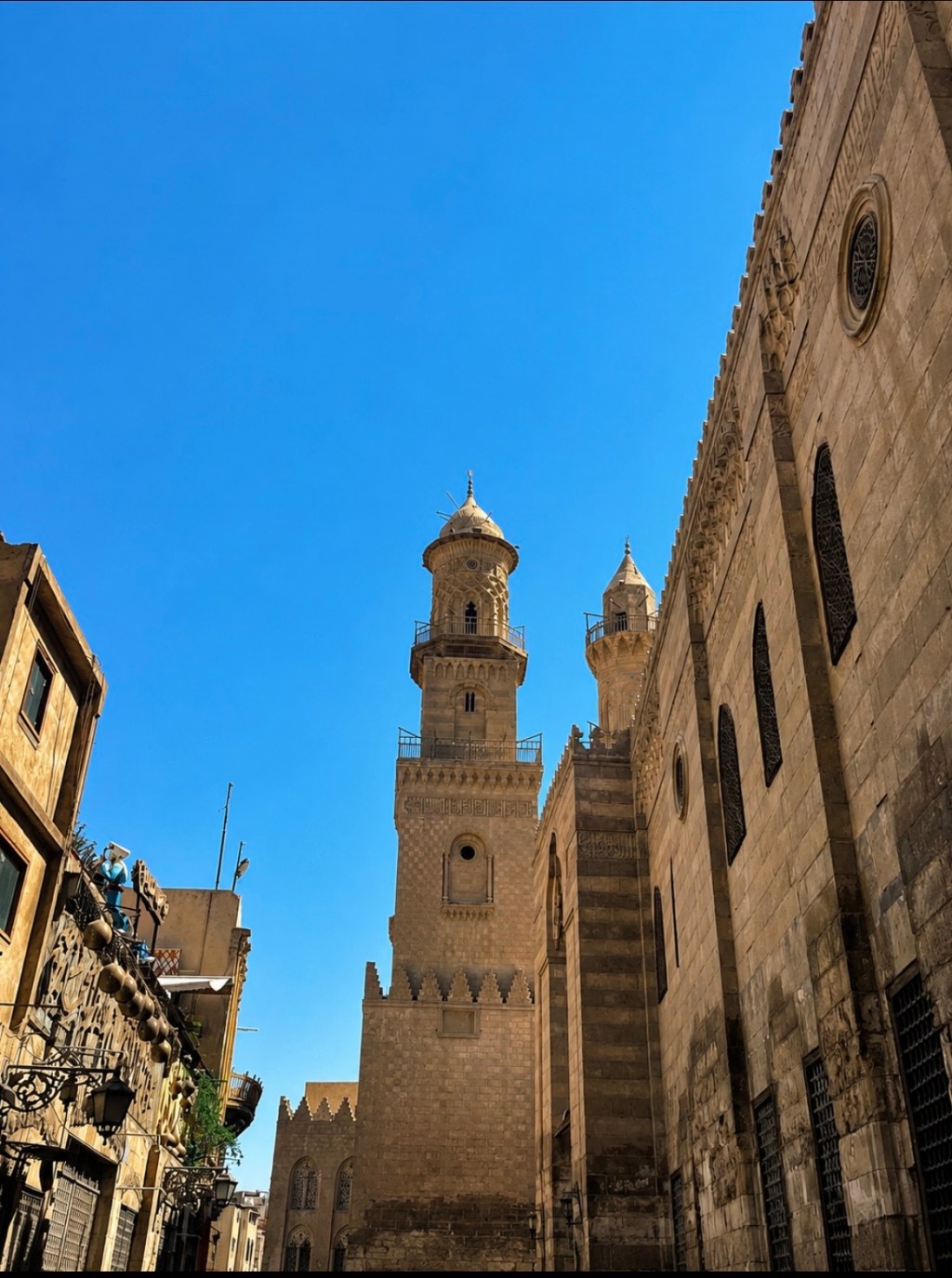
The bus from Hurghada to Cairo takes hours, which gives you plenty of time to watch the landscape change outside the window. For a long time, there isn’t much to see beyond the road and the desert. Then Cairo begins.
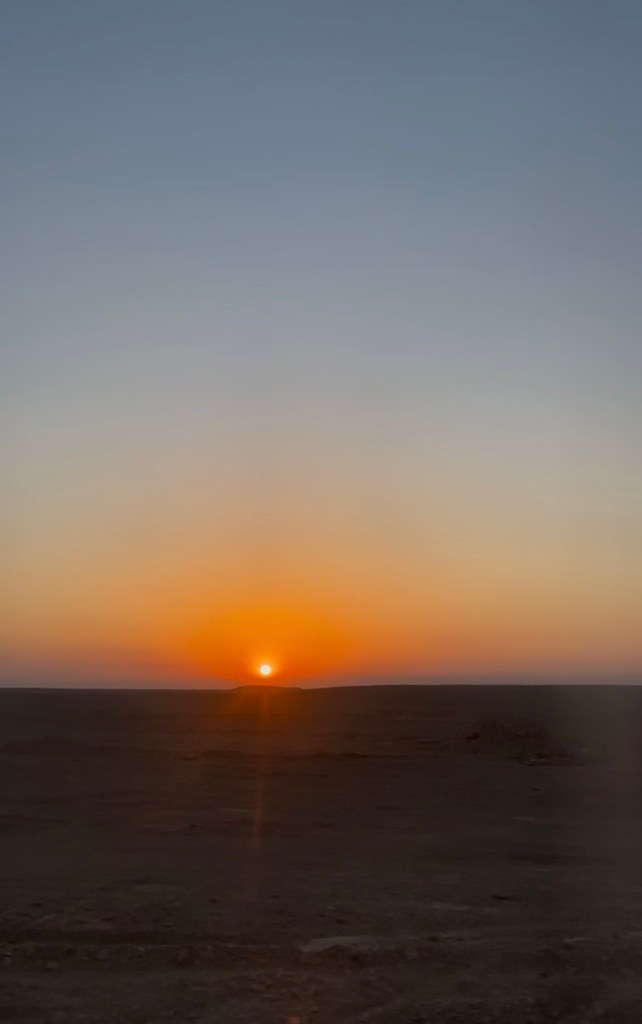
Buildings appear, then more buildings, then traffic. Cars seem to fit into spaces that don’t look large enough for cars. Horns are apparently a form of communication. People are crossing roads I would have waited ten minutes to cross. Within a very short time, I had stopped trying to understand the traffic altogether.
Cairo in summer also comes with another problem: the heat.
A freezing cold mango juice turned out to be one of the best things to have in that heat. Fresh, simple and cheap, it tasted unbelievably good. I still remember exactly how refreshing it was.
Maybe it was the heat.
Or maybe it was just very good mango juice.
Of course, there was one part of Cairo I had been waiting to see long before I arrived.
Giza.
There are very few places in the world that you’ve already seen this many times before actually going there. By the time you reach the pyramids, you know the silhouette. You know the photographs. You know exactly what you’re supposed to be looking at.
And then there they are.
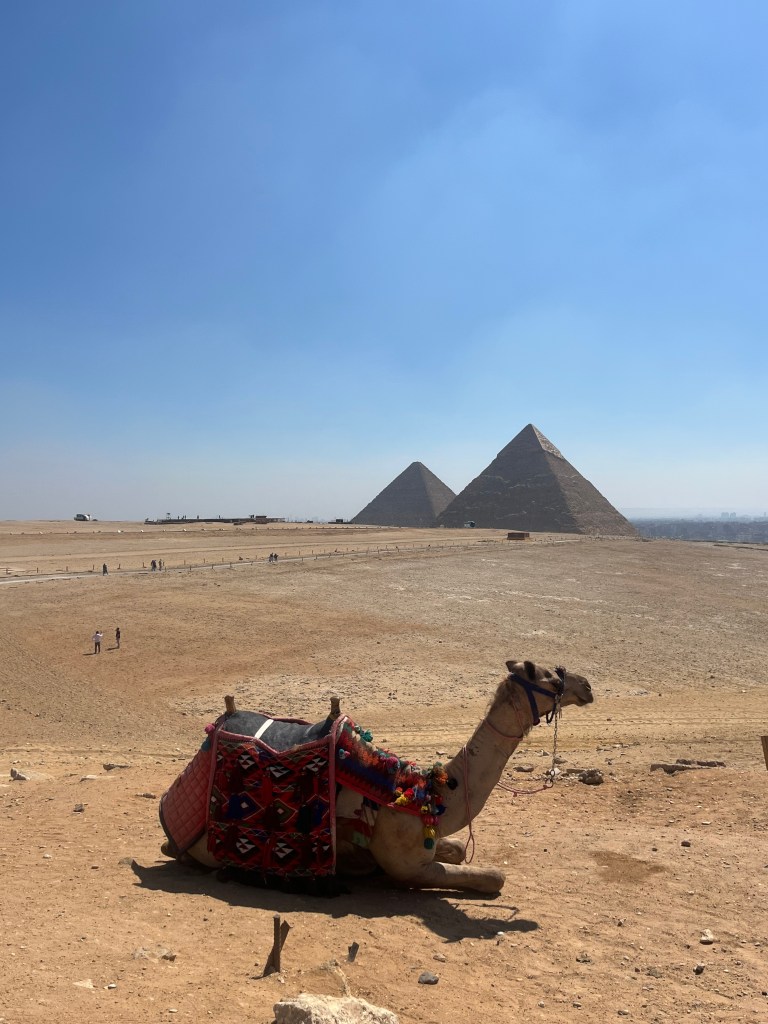
What the photographs don’t prepare you for is everything happening around them.
It was crowded when we went. Very crowded. Tour groups, camels, horses, people selling things, people taking photos, people calling to you. I don’t remember having a particularly silent or spiritual encounter with ancient Egypt. I remember looking up at the pyramids and thinking about how enormous they actually were while Cairo carried on noisily around them.
And somehow, that didn’t ruin it.
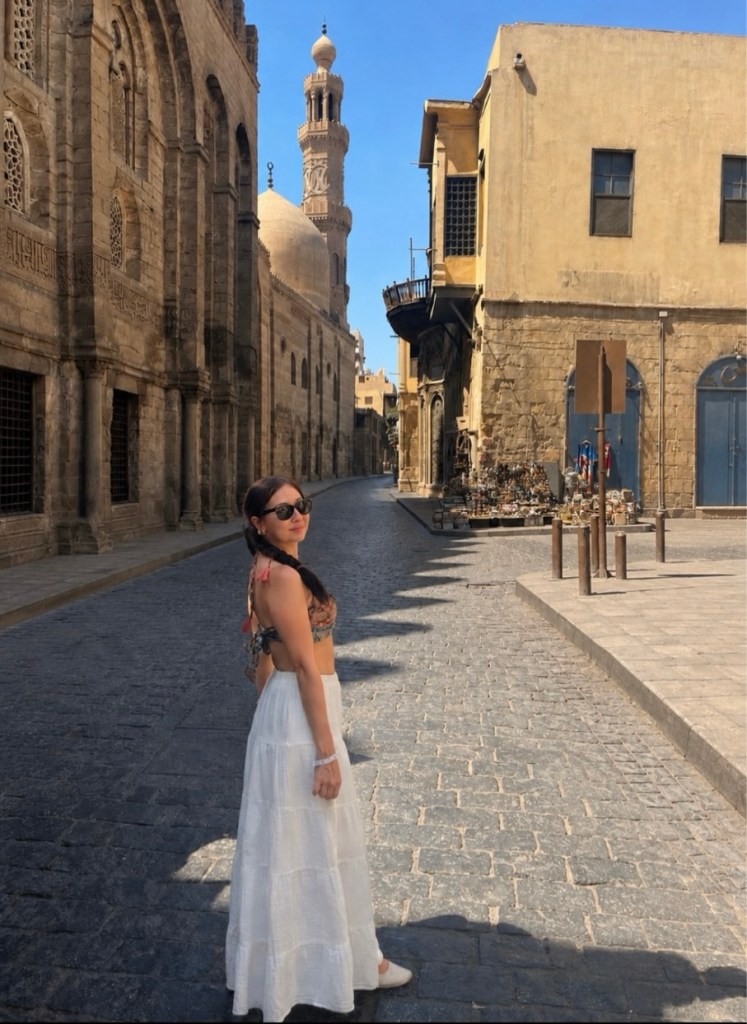
Leaving Giza behind didn’t make Cairo any quieter. Back in the city, there were still streets to get lost in, shops to look into and one place where simply asking a question turned out to be surprisingly difficult.
Khan el-Khalili.
The market was full of old shops, jewellery, copper, hanging lamps and tiny spaces packed with things. There was always something else to look at, which is probably why I made the mistake of asking how much something cost.
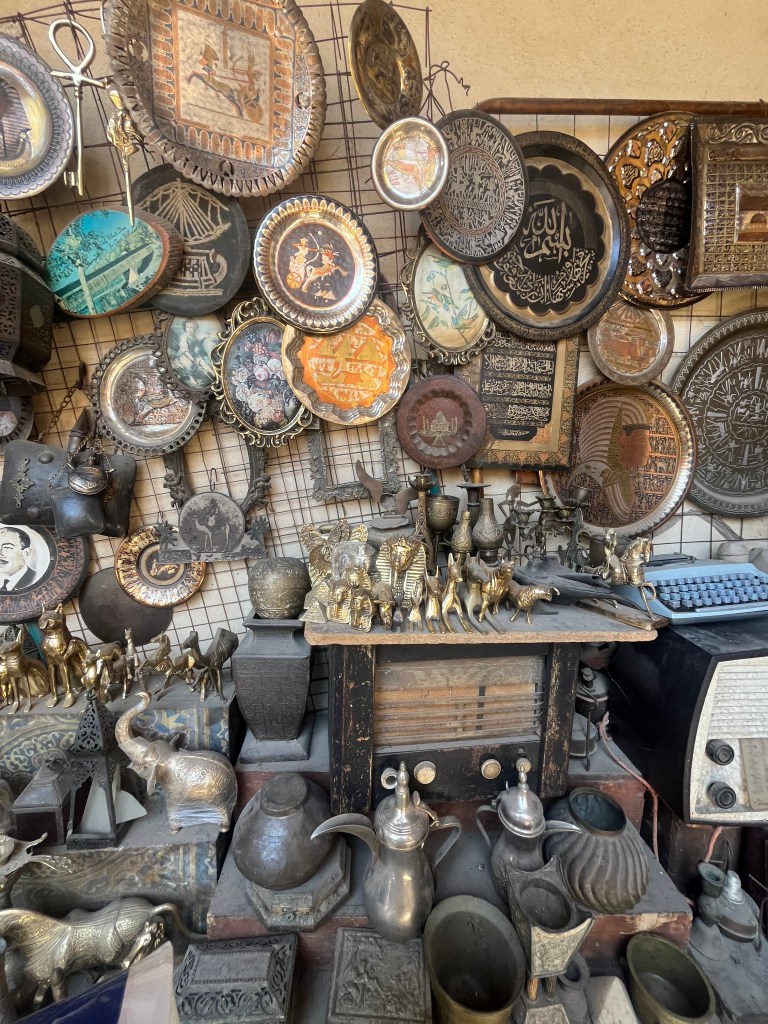
I say “mistake” because I wasn’t planning to buy it.
Apparently this information was irrelevant.
The first price came. I said no and kept walking. A second price came. Still no. Then a third. The seller followed us out of the shop, through the market and eventually far enough into the street that the whole situation became funny. Every time I refused, the price dropped again.
By the end, I wasn’t interested in the thing at all. I was interested in the experiment.
How low could this possibly go?
Quite low, as it turned out.
And Khan el-Khalili was full of moments like that. Old copper shops next to jewellery stalls, lamps hanging overhead, tiny shops packed with things, sellers calling from every direction. It was beautiful, but not in a quiet museum-piece way. Everything was being touched, sold, argued over and bargained for.
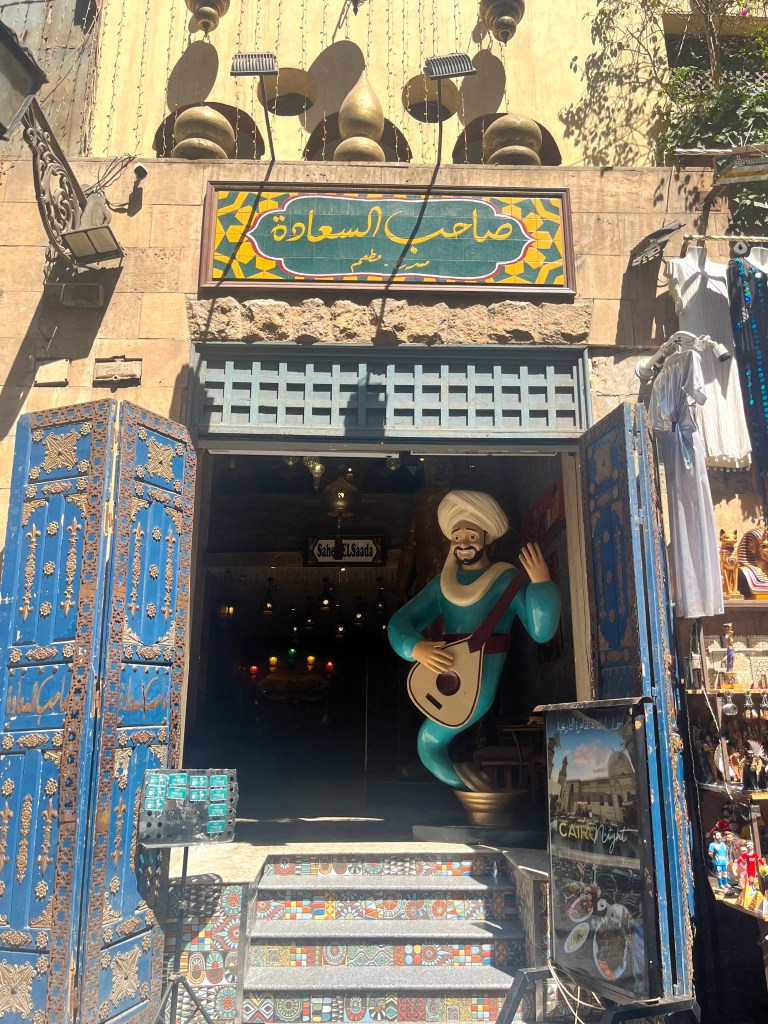
Cairo felt different again after dark.
The streets were still busy, but at night the city seemed to soften a little. There were lights everywhere, traffic still moving, people still out, and the Nile cutting through all of it.
One night, we saw the city from the water. A boat on the Nile, an oriental show, the lights of Cairo around us, and plenty of dancing along the way. It was lively, a little chaotic and very easy to enjoy.
It was another side of Cairo, and one I was glad we got to see.
When I think about Cairo now, the pyramids are obviously part of it. It is difficult for them not to be. But they aren’t the whole memory.
I remember the traffic and the streets, the heat, the old shops in Khan el-Khalili, prices getting lower with every “no,” that freezing cold mango juice, and Cairo lit up from the Nile.
The pyramids were what I expected to remember. Cairo gave me much more to remember than that.


Leave a Reply